Up Arrow: A Bold Statement for Modern Embroidery Markets
As an embroidery designer who has spent countless weekends standing behind booth tables, I have learned that the difference between a browser and a buyer often comes down to visual clarity and immediate emotional connection. When I first loaded the Up Arrow machine embroidery design into my software, I was looking for more than just a geometric shape. I was looking for a versatile asset that could anchor a collection of handmade products without overwhelming the fabric. This review breaks down how this specific design performs in the real world of craft fairs, Etsy shops, and boutique manufacturing.
First Impressions and Visual Impact
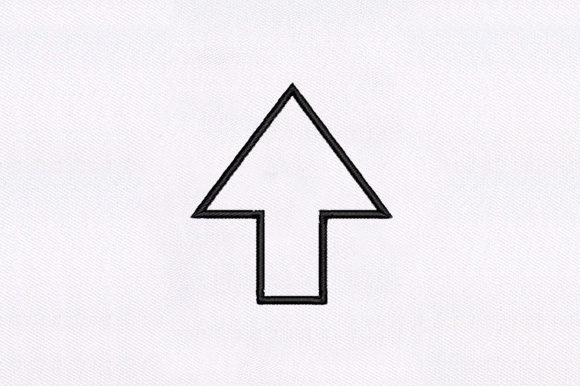
The Up Arrow design immediately strikes me as modern, minimal, and directive. In the crowded landscape of Transportation and Embroidery themed items, arrows have become a staple because they symbolize progress, direction, and forward movement. However, not all arrow designs are created equal. This particular file feels clean and intentional. It does not rely on excessive decorative flourishes that can get lost in translation when stitched out. Instead, it offers a bold silhouette that reads well from a distance, which is crucial for catching the eye of a passerby at a busy market.
For craft fair sellers, the aesthetic versatility here is key. The design feels equally at home in a rustic farmhouse setting or a sleek, modern urban boutique. It is not overly cute, nor is it strictly industrial. This neutrality allows you, the maker, to define the mood through your choice of thread colors and fabric textures. Whether you are aiming for a soft, organic look with earth tones or a high-contrast pop with neon threads, the underlying structure of the Up Arrow supports both approaches effectively.
Product Applications and Market Fit
When preparing a table display, I always ask myself where a design will have the most impact. The Up Arrow excels on larger surface areas where its lines can breathe. Here is how it performs across various popular handmade product categories:
- Tote Bag Design: This is perhaps the strongest application. A large Up Arrow centered on a canvas tote creates an instant graphic statement. It transforms a simple bag into a fashion accessory that signals ambition and style.
- Apron Embroidery: Placed on the bib or the lower corner, the arrow adds a playful yet professional touch to kitchen wear. It works beautifully for gifts aimed at new homeowners or cooking enthusiasts.
- Tea Towel Embroidery: For kitchen textiles, scale is everything. If the design is scaled down appropriately, it serves as a charming accent. However, ensure the stitch density is not too high for thin cotton towels to avoid puckering.
- Embroidered Patch: Arrows make excellent patches. Because the shape is self-contained, it cuts cleanly and applies well to denim jackets, backpacks, and hats. This is a high-margin small shop product that appeals to younger demographics.
- Caps and Headwear: Curved surfaces are tricky. The Up Arrow works well on the front panel of a cap if the size is moderate. Avoid making it too wide, as the curvature of the brim can distort the perception of straight lines.
Beyond physical goods, this design is a strong candidate for digital embroidery file sales. Etsy sellers and creative entrepreneurs can market this as a versatile element for DIYers. Including a printable mockup in your listing helps customers visualize the final result, increasing conversion rates for your design assets.
Production Practicality and Stitch Quality
From a technical standpoint, producing the Up Arrow requires attention to detail. While the concept is simple, the execution determines the perceived quality of the finished product. One of the primary concerns with geometric shapes is stitch density. If the design is too dense, it can cause the fabric to pull or pucker, especially on lighter materials like tea towels or linen. Conversely, if it is too sparse, the backing fabric may show through, ruining the crisp look of the arrow.
I recommend testing the design on scrap fabric before committing to a full production run. Pay close attention to the tips of the arrow. Sharp points can sometimes become blunt if the machine stops and starts incorrectly or if the thread tension is off. Using the right stabilizer is non-negotiable here. For stretchy fabrics like t-shirts or tote bags, a cut-away stabilizer provides the necessary support to keep the lines straight and true. For woven fabrics like aprons or pillow covers, a tear-away stabilizer may suffice, but always test first.
The provided embroidery file formats—10O, ART, CND, DSB, DST, DSZ, EXP, HUS, JEF, PCS, PEC, PES, TAP, VIP, VP3, XXX—cover a vast range of machines. This compatibility is a significant advantage for commercial embroidery operations. However, do not assume that one size fits all. You must check the specific hoop size requirements for each format variant. A design optimized for a 4x4 hoop will look very different when scaled up for a 5x7 or 6x10 hoop. Always verify the dimensions in your software to ensure the design fits your intended product without distortion.
Strategic Selling and Brand Consistency
How does the Up Arrow affect your brand? For boutique makers, consistency is vital. If your brand identity is built on clean lines and modern aesthetics, this design reinforces that message. It photographs exceptionally well for online listings because of its high contrast potential. A black arrow on white canvas, or a gold thread on navy blue, creates images that stop the scroll on social media platforms.
For those selling at craft fairs, consider using the Up Arrow as a unifying theme across your booth. Imagine a display featuring tote bags, pillows, and patches, all featuring variations of this single motif in different colorways. This creates a cohesive visual story that makes your booth look curated and professional. It also simplifies your inventory management, as you are mastering one design rather than struggling with dozens of unrelated patterns.
When marketing this as a commercial embroidery product, emphasize the ease of use. Highlight that it is a low-risk design for beginners due to its straightforward shape, yet sophisticated enough for advanced users who want to experiment with complex thread blends or textured stitches. Mentioning that it is suitable for both personal and commercial use (after confirming license terms) can broaden your customer base significantly.
Final Designer Notes and Recommendations
Before you launch your Up Arrow products, take these final steps to ensure success:
- Check Thread Contrast: Ensure your thread color stands out against the fabric. Low contrast can make the design look muddy from a distance.
- Review Spacing: If combining the arrow with text, leave ample negative space. Crowded designs lose their impact.
- Inspect Stitch Density: Run a test stitch-out. If the fabric puckers, reduce the density or change your stabilizer.
- Confirm Commercial Licensing: Always read the license agreement associated with the digital embroidery file. Ensure you have the rights to sell finished products made with this design.
- Create Real Mockups: Do not rely solely on digital previews. Photograph the actual stitched item on a person or in a lifestyle setting to show scale and texture.
The Up Arrow is more than just a directional symbol; it is a versatile tool for modern makers. By understanding its strengths in clarity and adaptability, you can create handmade products that not only look professional but also resonate with customers looking for meaning and style in their everyday items. Whether you are an Etsy seller expanding your catalog or a craft fair veteran refreshing your booth, this design offers a solid foundation for growth and creativity.